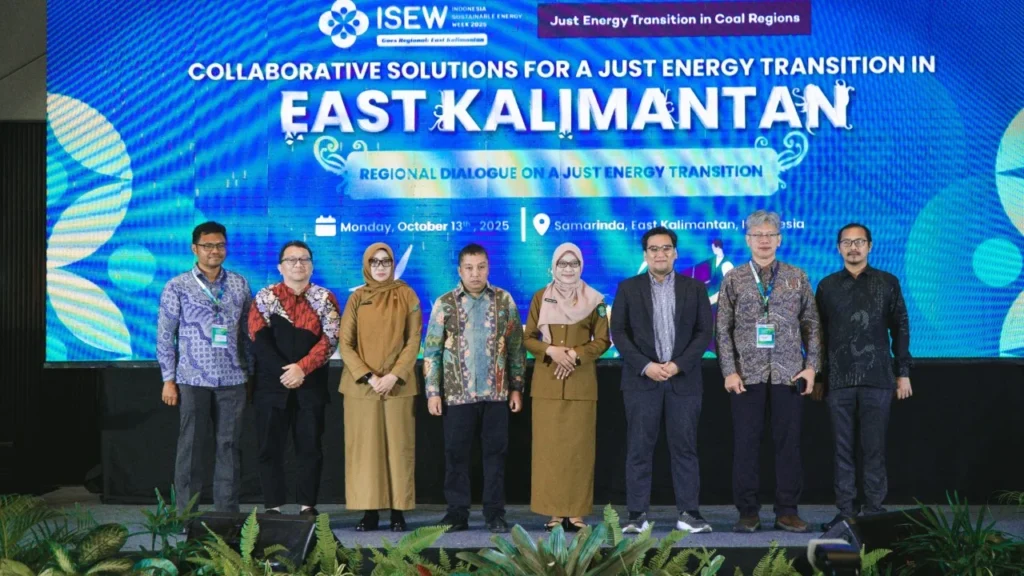
SAMARINDA, 20 October 2025 – Indonesia Sustainable Energy Week (ISEW) Goes Regional East Kalimantan 2025 was successfully held in Samarinda, East Kalimantan, from 13–16 October 2025. The event marked a major milestone in national and local efforts to accelerate a just energy transition and strengthen green economic transformation, particularly in Indonesia’s largest coal-producing province.
ISEW Goes Regional was jointly organized by the Ministry of National Development Planning (Bappenas) and the Ministry of Energy and Mineral Resources (MEMR), in collaboration with the Provincial Government of East Kalimantan and the Government of Germany, through its energy cooperation program implemented by GIZ Indonesia/ASEAN. As part of the series, the International Capacity Development Program (ICDP) for Coal Regions in Transition was also conducted, bringing together more than 45 delegates from seven countries.
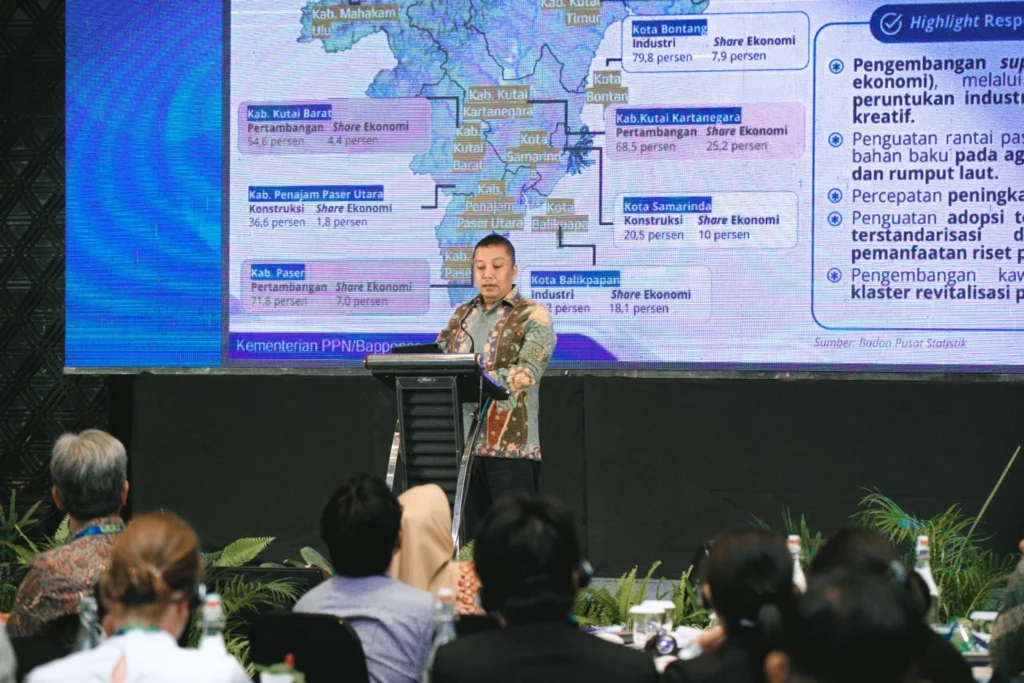
Abdul Malik Sadat Idris, Deputy for Infrastructure of the Ministry of National Development Planning (Bappenas), highlighted that East Kalimantan holds enormous potential to lead Indonesia’s green industrial transformation.
“East Kalimantan is rich in energy resources. Our priority now is to turn this wealth into local value, through downstreaming and clean-energy industries, so that the benefits are felt by communities here, not only sent out of the province. To achieve this, we must accelerate the development of efficient and reliable energy infrastructure to support new industrial ecosystems,” he said.
According to him, ISEW plays a crucial role in aligning Indonesia’s national vision for a just and green energy transition with local implementation, in line with the country’s long-term goal of achieving net-zero emissions by 2060 or sooner.
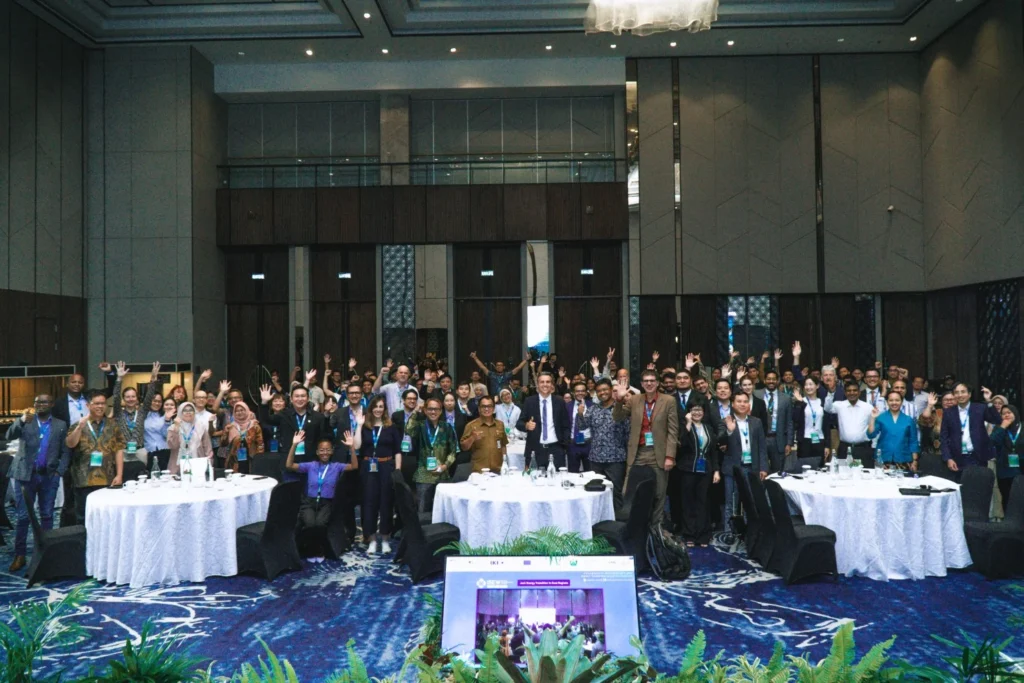
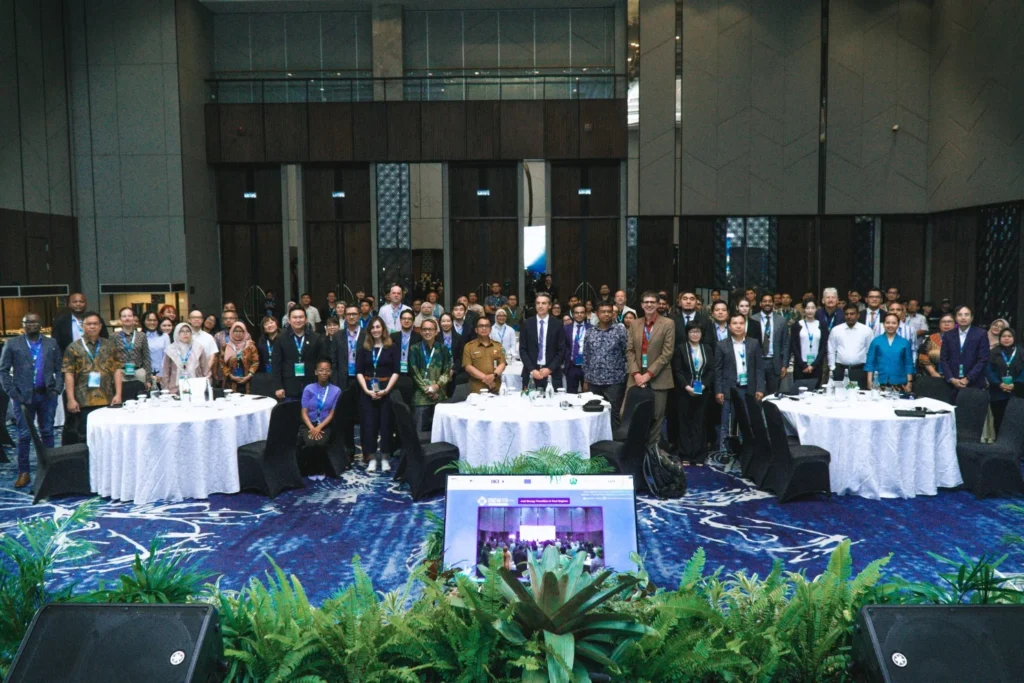
Under the theme “Just Energy Transition,” the event served as a platform for a wide range of stakeholders to exchange ideas, experiences, and strategies to accelerate the shift toward clean energy while preparing concrete steps to reduce dependence on fossil fuels, particularly oil and coal. Over four days, the forum brought together representatives from national and local governments, academia, the private sector, research institutions, and civil society to discuss policy directions and green economic opportunities in East Kalimantan.
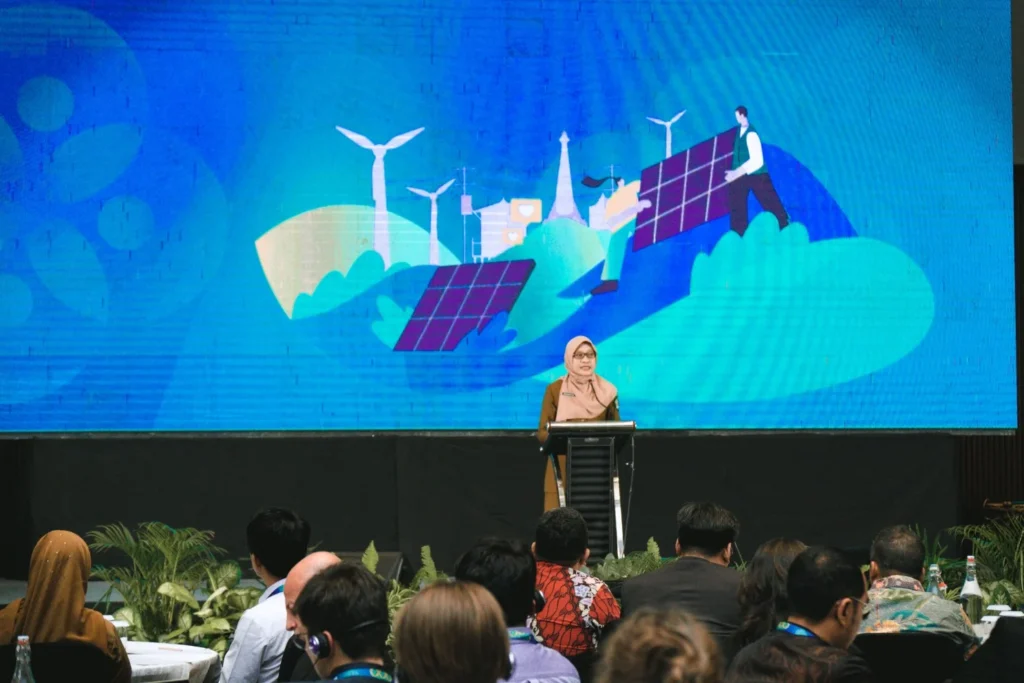
Sri Wahyuni, Regional Secretary of East Kalimantan Province, emphasized that hosting ISEW in Samarinda aligns with the region’s ongoing sustainable development agenda.
“East Kalimantan has long been committed to realizing both economic and energy transformation. These two are inseparable, as our economy still relies heavily on mining and oil and gas. Through a forum like ISEW, we can further strengthen our collective steps toward a more sustainable green economy,” she said.
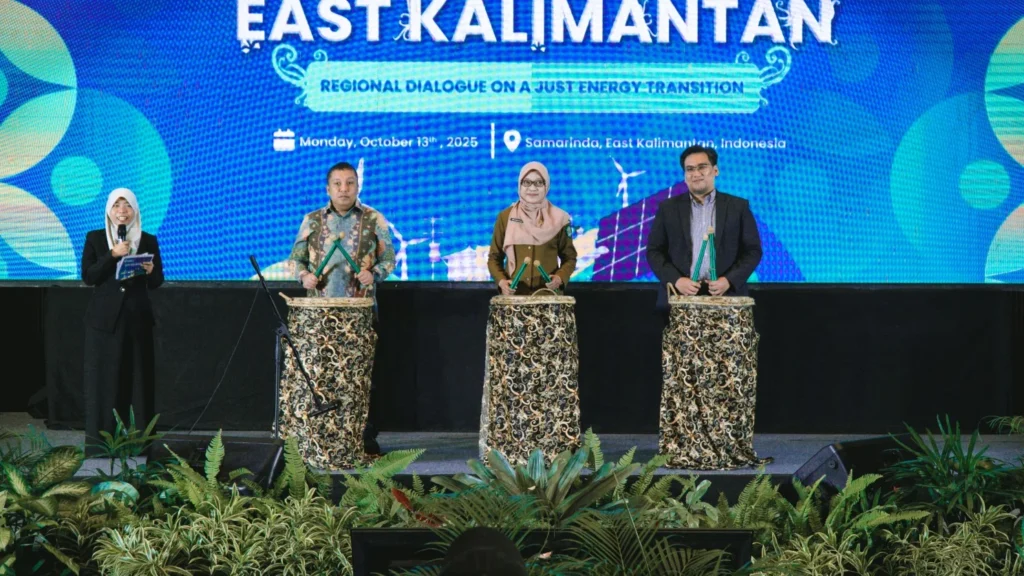
Ardian Candraputra, Team Lead of the Energy Hub Project, GIZ Indonesia/ASEAN, explained that ISEW Goes Regional in East Kalimantan featured a variety of thematic sessions designed to connect national policy with local implementation. The first day discussed the alignment of national targets with subnational policy execution. The second day featured the International Forum on Coal Regions in Transition, with speakers from multiple countries. The third day focused on economic resilience strategies and green workforce development to support the energy transition, while the final day engaged students and academics from Mulawarman University in an interactive dialogue on the role of youth and education in shaping a just energy transition for East Kalimantan.
In addition to the series of discussions, participants joined field visits to several key sites including PT MHU Loa Kulu, the Jonggon post-mining area, Pertamina RU V Balikpapan, and the Manggar Independent Energy Village (TPA Manggar). These visits provided first-hand insights into emerging best practices and innovative clean energy initiatives across the province.
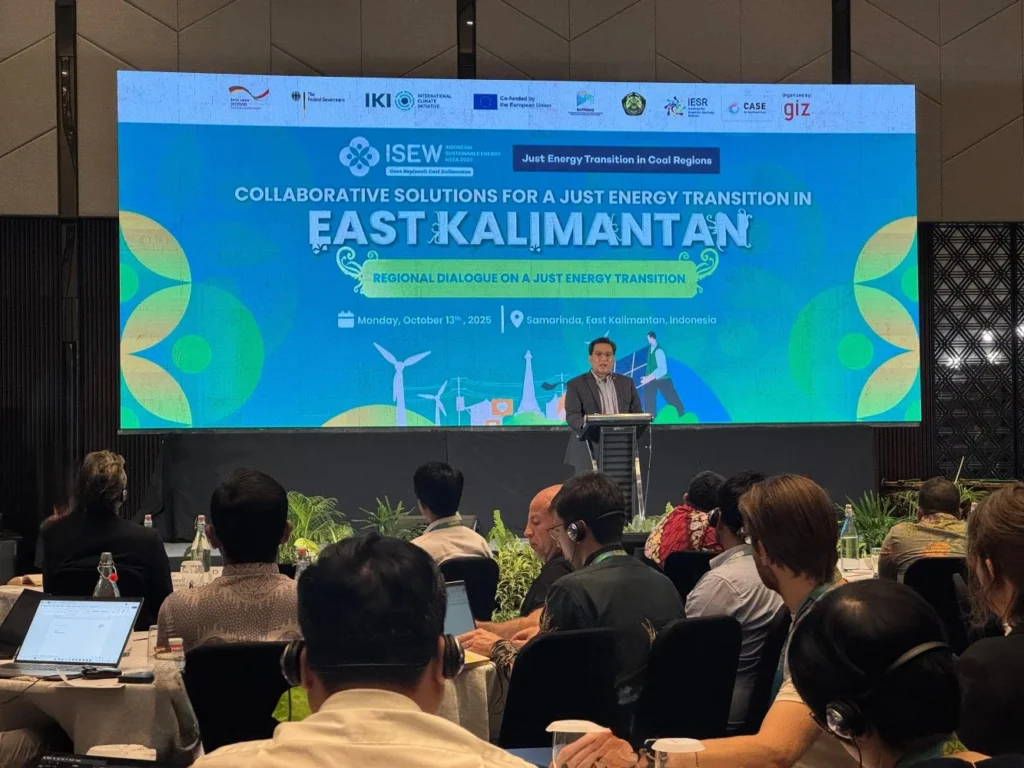
According to Ardian, the successful implementation of ISEW in East Kalimantan reflects the strong commitment and collaborative spirit between Indonesia and Germany in advancing an inclusive, evidence-based, and locally grounded energy transition.
“ISEW Goes Regional is more than a discussion forum, it is a collaborative space that bridges policy, industry, academia, and communities to ensure that the energy transition delivers real and shared benefits for all,” he said.
Following its implementation in East Kalimantan, the ISEW 2025 series will continue in Makassar, South Sulawesi, with a focus on renewable energy development in marine and coastal sectors. The discussions and insights generated from the Samarinda sessions will serve as valuable input for the Indonesia Sustainable Energy Week 2026, which is planned to be held at the national level.
About the Indonesia Sustainable Energy Week (ISEW)
ISEW is an annual forum initiated by the Ministry of Energy and Mineral Resources (MEMR) and the Ministry of National Development Planning (Bappenas), with support from the Government of Germany through GIZ Indonesia/ASEAN. The forum serves as a cross-sector collaboration platform to strengthen policy dialogue, exchange best practices, and build capacity in the field of sustainable energy. Through its Goes Regional edition, ISEW is organized directly in various provinces to accelerate the inclusive and evidence-based implementation of energy transition at the local level.
About GIZ Indonesia/ASEAN
The Deutsche Gesellschaft für Internationale Zusammenarbeit (GIZ) is a German development agency that has been operating in Indonesia since 1975 and in ASEAN since 2009. On behalf of the Federal Ministry for Economic Cooperation and Development (BMZ) and other federal ministries, including the Federal Ministry for the Environment, Nature Conservation, Nuclear Safety and Consumer Protection (BMUV) through the International Climate Initiative (IKI), GIZ supports sustainable development in the areas of energy transition, green employment, climate resilience, and green infrastructure. The GIZ office in Jakarta coordinates cooperation programs with the Government of Indonesia and ASEAN to help achieve climate and sustainable development goals.