ENTRI (Renewable Energy Minigrids in Triangular South-South Cooperation)
Status
Ongoing
Overall Project Duration
2023–2027
Commissioner
BMZ
Political Partner
Ministry of Energy and Mineral Resources – Directorate General of New Renewable Energy and Energy Conservation (DJ EBTKE, ESDM)
Cooperation Partners
Implementing Organization
GIZ
Project page on organization website
Project Documents and Links
Promoting decentralised renewable energy that will contribute to the combatting of the global climate crisis, while supporting economic and social development and strengthening Indonesia’s position in global development communities, particularly in the field of decentralised renewable energy, with the global south.
Background
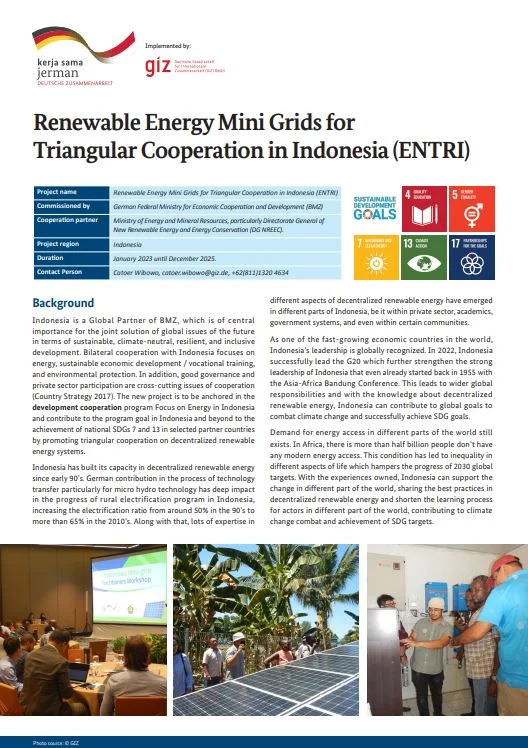
Indonesia is a Global Partner of BMZ, playing a central role in addressing global future challenges through sustainable, climate-neutral, resilient, and inclusive development. Bilateral cooperation with Indonesia focuses on energy, sustainable economic development, vocational training, and environmental protection. Additionally, good governance and private sector participation are key crosscutting issues (Country Strategy 2017).
ENTRI is embedded in Indonesia’s energy development cooperation program, contributing to the achievement of national SDG 7 and SDG 13, and promoting triangular cooperation on decentralized renewable energy systems in selected partner countries. Since the early 1990s, Indonesia has built capacity in decentralized renewable energy, with German contributions, particularly in micro-hydro technology, having a significant impact on rural electrification. This support has increased Indonesia’s electrification ratio from around 50% in the 1990s to over 65% in the 2010s.
Moreover, expertise in decentralized renewable energy has developed across Indonesia, within the private sector, academia, government systems, and communities. Building on Indonesia’s successful G20 hosting in 2022 and its leadership role since the 1955 Asia-Africa Bandung Conference, Indonesia is well-positioned to assume broader global responsibilities. With its expertise in decentralized renewable energy, Indonesia can contribute to global climate change goals, help achieve SDG targets, and share best practices, accelerating learning for global actors while strengthening international cooperation.
Project Approach
ENTRI implements triangular cooperation, with Indonesia as the pivotal partner, Germany as the facilitating partner, and countries from the global south as the beneficiary partner. The implementation of SSTCs within ENTRI is coordinated with the National Coordination Team of Indonesia South-South Cooperation, which includes the Indonesian Ministry of Foreign Affairs, the Indonesian Ministry of State Secretariat, the Indonesian Ministry of Finance, and the Indonesian Ministry of National Development Planning/BAPPENAS. SSTCs enable multi-directional learning, positioning all participating countries, including Indonesia, as both a source of knowledge and/or recipient of knowledge.
Desired Impacts
The capacity of Indonesia’s Ministry of Energy and Mineral Resources in implementing triangular cooperation in decentralized renewable energy is strengthened. South-South Triangular Cooperation exchanges between experts and executives from the public and private sectors on decentralized renewable energy systems are conducted with selected countries.
Technical and methodological insights gained from the development and implementation of South-South triangular cooperation are integrated within the Ministry of Energy and Mineral Resources and Indonesia’s system for International Development Cooperation, including the National Coordination Team of Indonesia South-South Cooperation.
Project Activity Areas (Outputs)
Focus Group Discussion
Exchanges in different forms
Pilot Projects
Debriefings
International Conferences
Project Publications
Project Updates
Tools
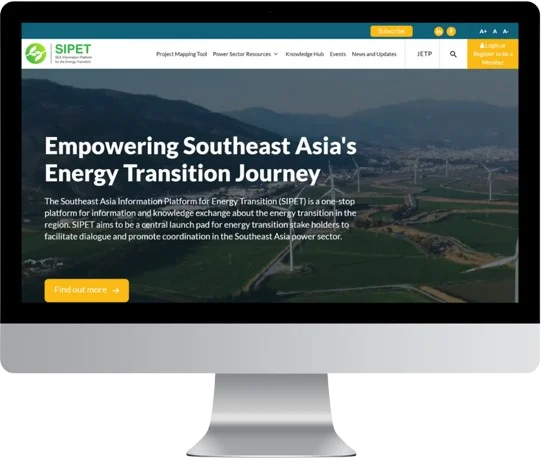
SEA Information Platform for the Energy Transition (SIPET)
The Southeast Asia Information Platform for Energy Transition (SIPET) is a one-stop platform for information and knowledge exchange about the energy transition in the region. SIPET aims to be a central launch pad for energy transition stake holders to facilitate dialogue and promote coordination in the Southeast Asia power sector.
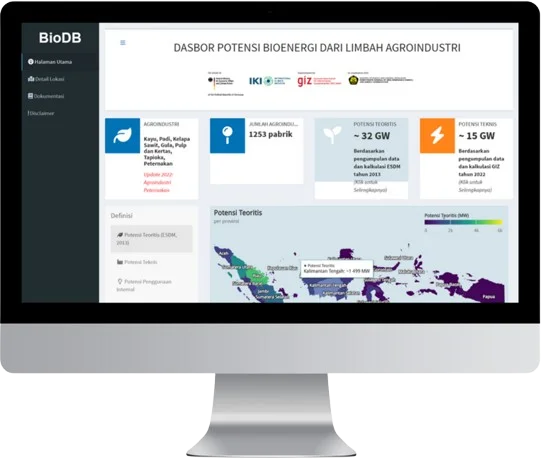
Bio DB
BioDB is a useful website for providing general information, encouraging discussion and conversation on the topic of bioenergy from agro-industrial waste. The data and information presented were collected by the Strategic Exploration of Economic Mitigation Potentials through Renewables (ExploRE) project, a project funded by the Federal Ministry for the Environment, Nature Conservation and Nuclear Safety (BMU), Federal Republic of Germany, in collaboration with the Ministry of Energy and Mineral Resources (ESDM) of the Republic of Indonesia, and implemented by the Deutsche Gesellschaft für Internationale Zusammenarbeit (GIZ)
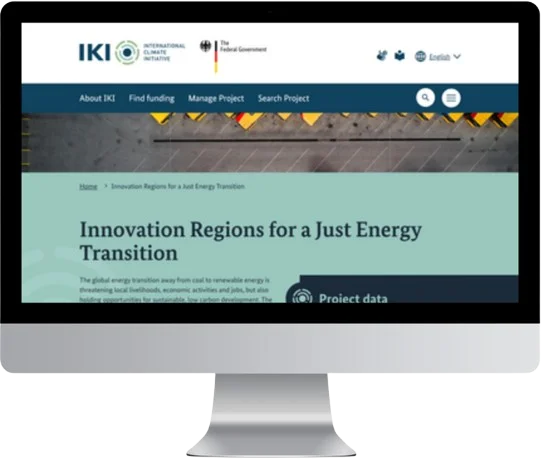
IKI JET
The global energy transition away from coal to renewable energy is threatening local livelihoods, economic activities and jobs, but also holding opportunities for sustainable, low carbon development. The project aims at supporting key stakeholder of coal regions to plan for and implement regional just energy transition pathways away from coal and towards a low-carbon energy system. Focusing on the regional economic transformations, the project works with government, industry, unions, communities, civil society, and academia. It supports interregional peer-to-peer exchange, learning, and policy dialogue in an international network and information sharing via a knowledge hub. In Indonesia, it supports the development of specific transition plans in two coal regions. In Colombia, it supports the development of the concept and framework for energy communities and the implementation of just and inclusive energy communities in César and la Guajira.
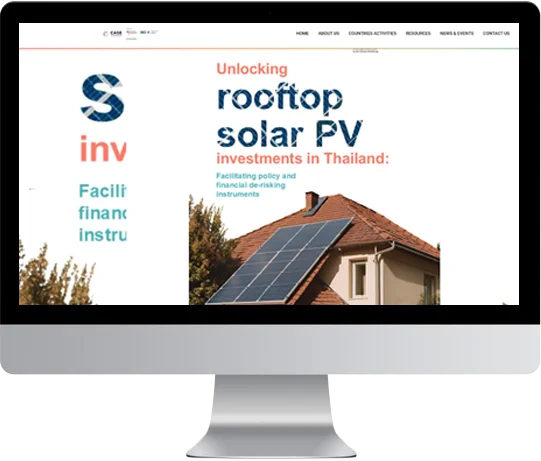
CASE for Southeast Asia
The “CASE for Southeast Asia” website is dedicated to the promotion of clean, affordable, and secure energy transitions across Southeast Asia. The website focuses on the provision of resources, the conducting of research, and the facilitation of collaborative projects in countries such as Indonesia, Thailand, the Philippines, and Vietnam, with the aim of supporting energy transition efforts. The platform highlights the challenges and opportunities in the region’s energy sector, while sharing knowledge, best practices, and policy recommendations aimed at advancing the transition to renewable energy and sustainable development
Contact
Project Address
De Ritz Building, Floor 2
Jl. HOS Cokroaminoto No. 91, DKI Jakarta, Indonesia
Catoer Wibowo
Commission Manager ENTRI