ExploRE (Strategic Exploration of Economic Mitigation Potentials through Renewables)
Status
Ongoing
Overall Project Duration
Commissioner
International Climate Initiative (IKI)
Political Partner
Ministry of Energy and Mineral Resources – Directorate General of New Renewable Energy and Energy Conservation (DJ EBTKE, ESDM)
Cooperation Partners
Coordinating Ministry for Maritime Affairs and Investment (Kemenkomarves), Ministry of National Development Planning (Bappenas), Ministry of Finance, Fiscal Policy Agency (MoF, BKF), PT PLN, PT Pertamina, and other private sectors.
Implementing Organization
GIZ
Project page on organization website
Project Documents and Links
Private sector investment in Renewable Energy (RE) is increased and economic and social development options are strengthened through the use of RE for reliable and sustainable energy supply
Background
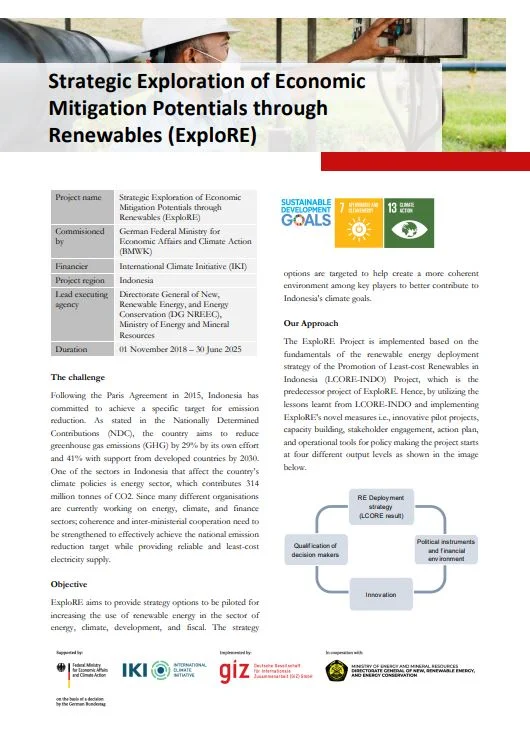
Following the Paris Agreement in 2015, Indonesia has committed to achieve a specific target for emission reduction. As stated in the Nationally Determined Contributions (NDC), the country aims to reduce greenhouse gas emissions (GHG) by 29% by its own effort and 41% with support from developed countries by 2030. One of the sectors in Indonesia that affect the country’s climate policies is the energy sector, which contributes 314 million tonnes of CO2. Since many different organisations are currently working on energy, climate, and finance sectors, coherence and interministerial cooperation need to be strengthened to effectively achieve the national emission reduction target while providing reliable and least-cost electricity supply.
Project Approach
The ExploRE Project is implemented based on the fundamentals of the renewable energy deployment strategy of the Promotion of Least-cost Renewables in Indonesia (LCORE-INDO) Project, predecessor project of ExploRE. The project works across four different output levels:
Desired Impacts
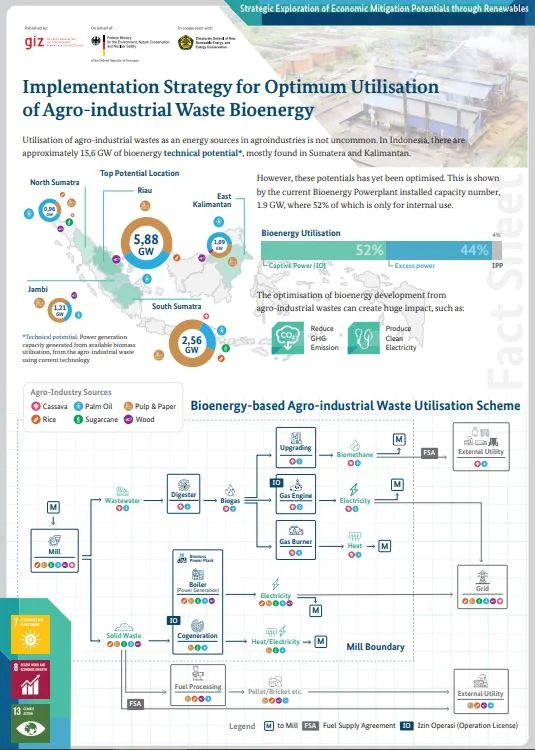
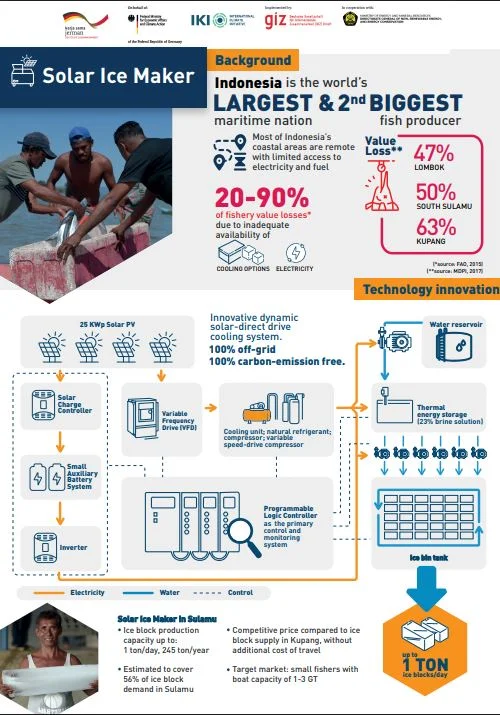
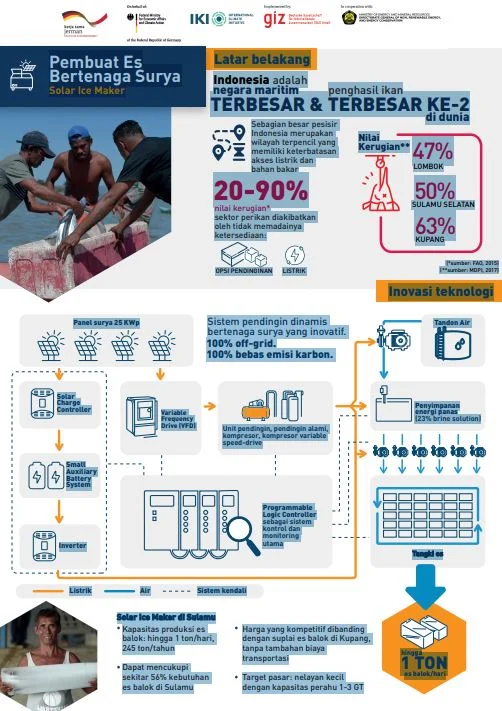
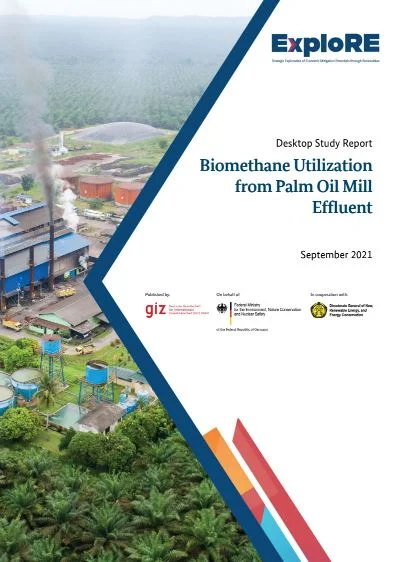
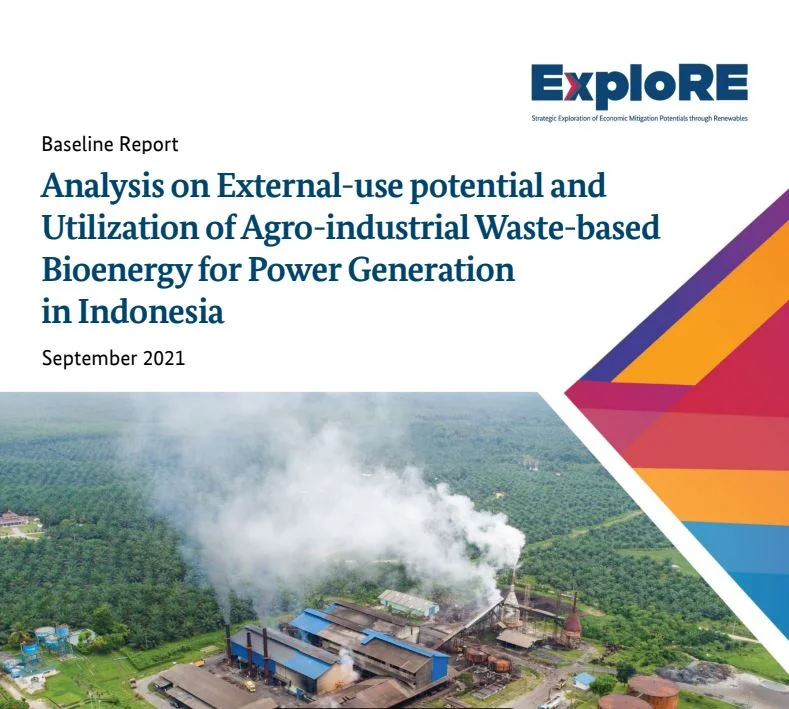
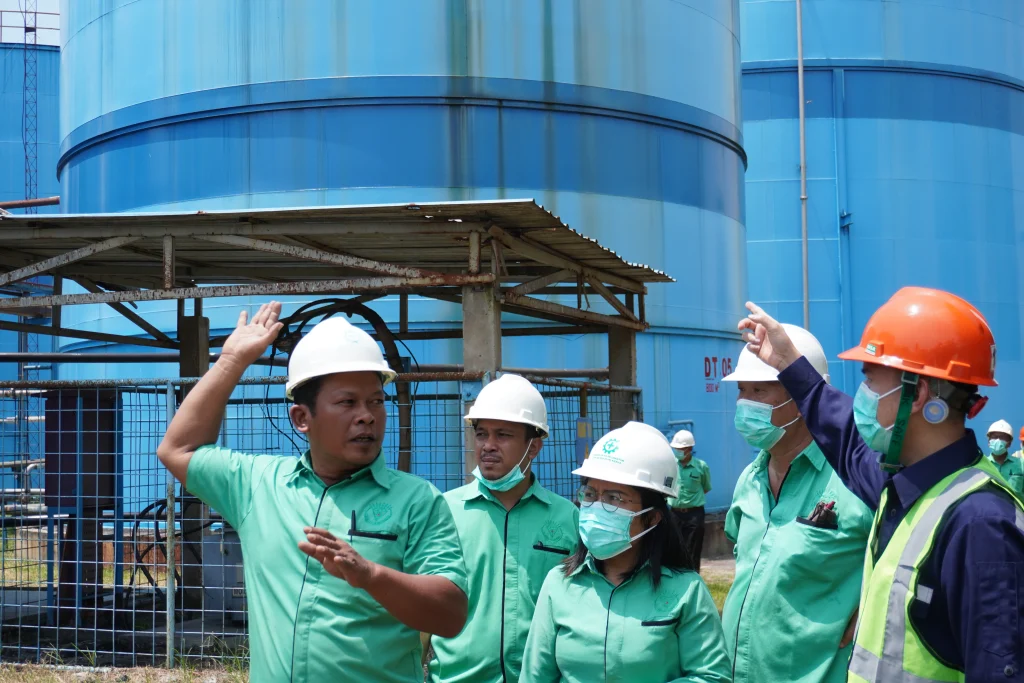
The development of Indonesia’s bioenergy potential database and dashboard, integrated into the publicly accessed MEMR One Map, helps enable the government and private sector in developing programs for more bioenergy project development. Through the development and implementation of the Biogas Plant Monitoring Application (M-Biogas), ExploRE successfully provides recommended actions to improve performance, enhance safety, and reduce potential malfunction risks in several biogas power plants. Through mapping support of biogas and biomass direct use in agroindustry for MEMR, ExploRE has contributed significantly to achieving the National Energy Mix Target by 93% and 85% of the 2023 and 2025 biomass utilization targets, respectively, as well as 23.07% and 14.02% of the 2023 and 2025 biogas utilization targets. ExploRE has actively contributed through technical assistance, studies, outreach, and private sector engagement, providing several recommendations for biomethane utilization as a strategic option for industry decarbonization and replacing fossil fuels. ExploRE has also been involved in providing recommendations for government counterparts (BAPPENAS, MEMR) for the development of a green hydrogen regulatory framework in Indonesia. ExploRE’s technical support in 11 biogas power plants, with a total capacity of 15.37 MW, and a solar-powered ice production site with a 25 kWp capacity, has contributed to mitigating at least 2.56 million tonnes of CO2 equivalent greenhouse gas emissions. The Solar Ice Maker pilot project in Sulamu, East Nusa Tenggara, commissioned in 2022, provides an environmentally friendly energy solution to stimulate economic growth in Indonesia’s remote and disadvantaged regions by integrating solar PV technology to power an ice-making machine, offering reliable cold chain access for local fishery industries.
Project Activity Areas (Outputs)
RE Deployment Strategy
Political Instrument and Financing Environment
Institution Building
Innovation
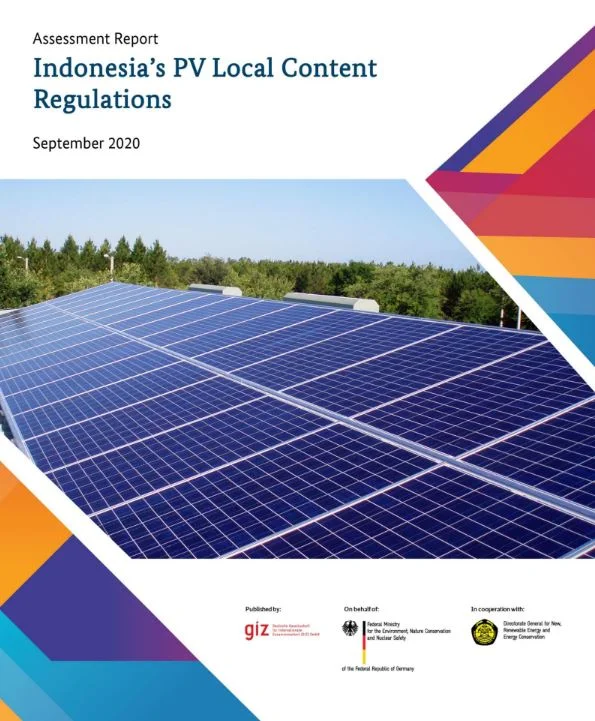
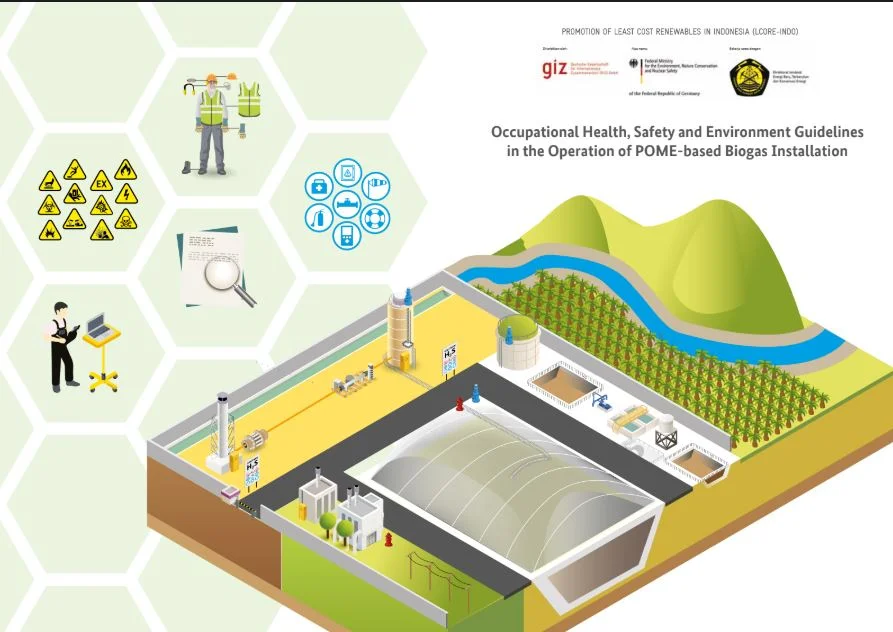
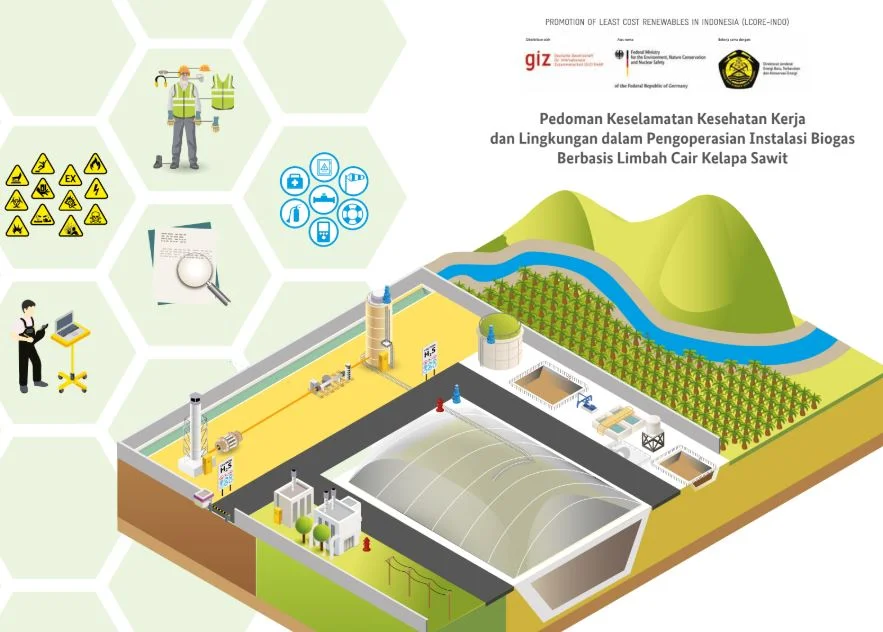
Project Publications
Tools
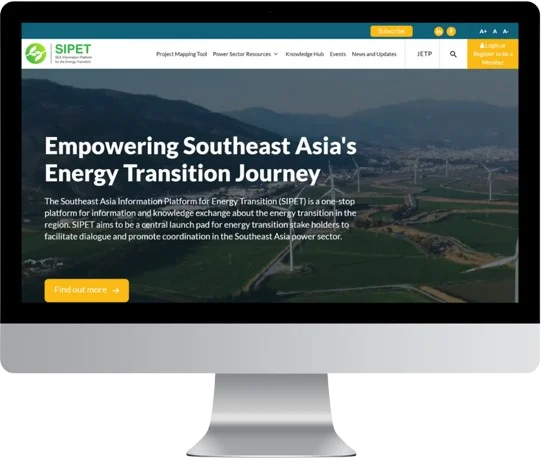
SEA Information Platform for the Energy Transition (SIPET)
The Southeast Asia Information Platform for Energy Transition (SIPET) is a one-stop platform for information and knowledge exchange about the energy transition in the region. SIPET aims to be a central launch pad for energy transition stake holders to facilitate dialogue and promote coordination in the Southeast Asia power sector.
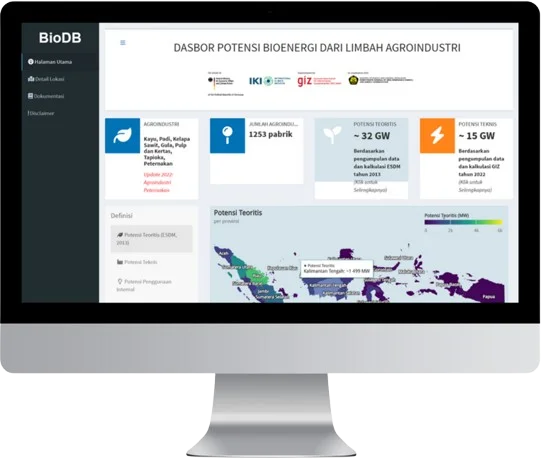
Bio DB
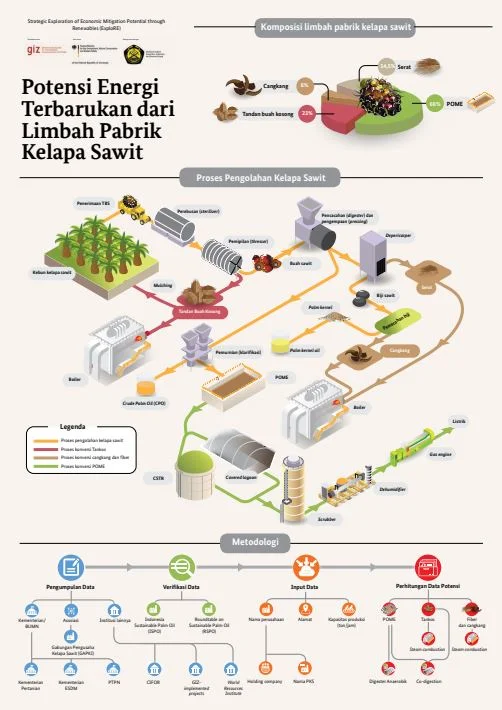
BioDB is a useful website for providing general information, encouraging discussion and conversation on the topic of bioenergy from agro-industrial waste. The data and information presented were collected by the Strategic Exploration of Economic Mitigation Potentials through Renewables (ExploRE) project, a project funded by the Federal Ministry for the Environment, Nature Conservation and Nuclear Safety (BMU), Federal Republic of Germany, in collaboration with the Ministry of Energy and Mineral Resources (ESDM) of the Republic of Indonesia, and implemented by the Deutsche Gesellschaft für Internationale Zusammenarbeit (GIZ)
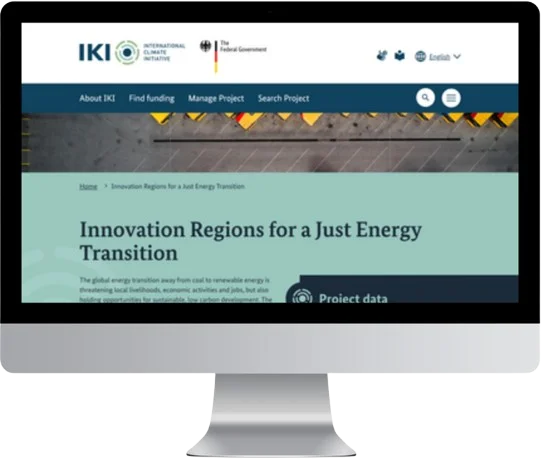
IKI JET
The global energy transition away from coal to renewable energy is threatening local livelihoods, economic activities and jobs, but also holding opportunities for sustainable, low carbon development. The project aims at supporting key stakeholder of coal regions to plan for and implement regional just energy transition pathways away from coal and towards a low-carbon energy system. Focusing on the regional economic transformations, the project works with government, industry, unions, communities, civil society, and academia. It supports interregional peer-to-peer exchange, learning, and policy dialogue in an international network and information sharing via a knowledge hub. In Indonesia, it supports the development of specific transition plans in two coal regions. In Colombia, it supports the development of the concept and framework for energy communities and the implementation of just and inclusive energy communities in César and la Guajira.
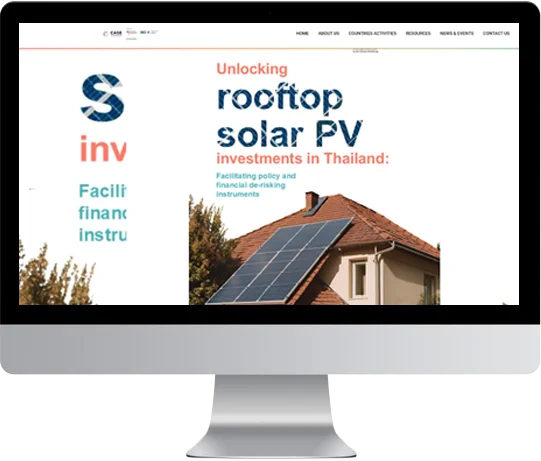
CASE for Southeast Asia
The “CASE for Southeast Asia” website is dedicated to the promotion of clean, affordable, and secure energy transitions across Southeast Asia. The website focuses on the provision of resources, the conducting of research, and the facilitation of collaborative projects in countries such as Indonesia, Thailand, the Philippines, and Vietnam, with the aim of supporting energy transition efforts. The platform highlights the challenges and opportunities in the region’s energy sector, while sharing knowledge, best practices, and policy recommendations aimed at advancing the transition to renewable energy and sustainable development
Contact
Project Address
Directorate General for New, Renewable Energy, and Energy Conservation (DG NREEC), Ministry of Energy and Mineral Resources 5th Floor Jl. Pegangsaan Timur No. 1A, Cikini, Jakarta 10320
Ardian Candraputra
Commission Manager ExploRE