REEP 1-2 (1000 Islands – Renewable Energy for Electrification Programme)
Status
Complete
Overall Project Duration
Done
Commissioner
Federal Ministry for Economic Cooperation and Development (BMZ)
Political Partner
Cooperation Partners
Implementing Organization
GIZ
Project page on organization website
- N / A
Project Documents and Links
To accelerate the use of renewable energy in Indonesia by supporting reliable, affordable, and sustainable electricity solutions for island and local grids.
Background
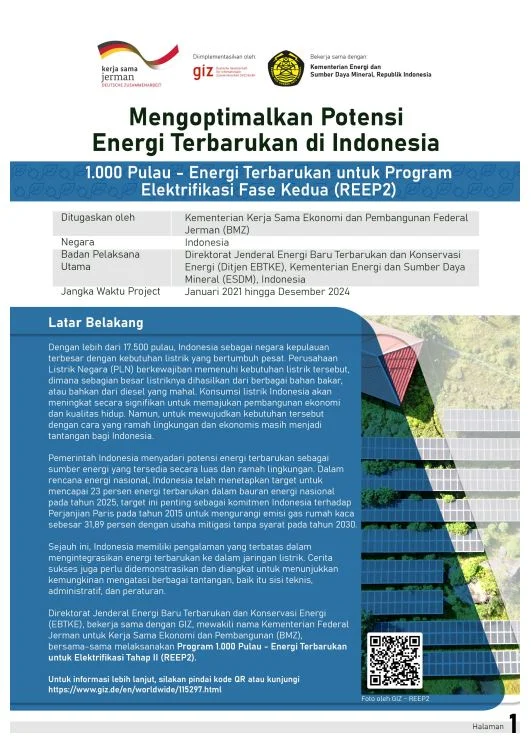
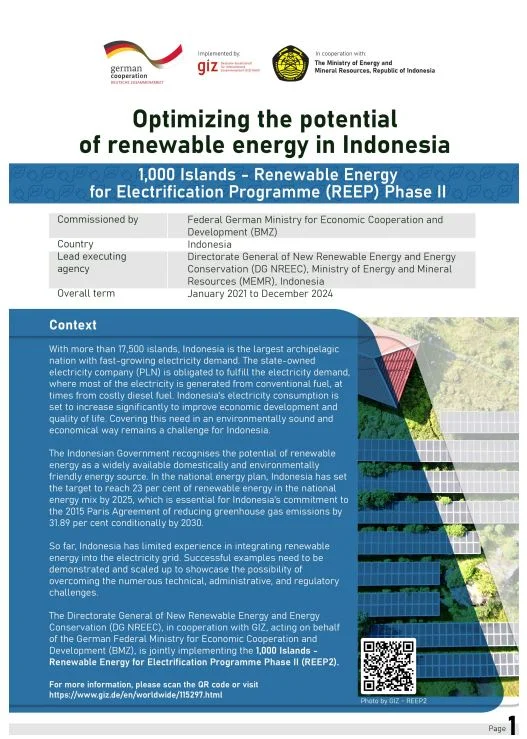
Indonesia is the world’s largest island nation. Its electricity demand is growing fast. The state electricity company PLN operates over 600 grids, and power is generated with coal and sometimes even with costly diesel fuel. Indonesia’s electricity consumption is currently comparatively low but set to increase significantly to improve the economic development and quality of life. Covering this need in an environmentally sound and economic way remains a challenge for Indonesia.
The Indonesian Government recognises the potential of renewable energy as a widely available domestic and climate friendly energy source. So far, Indonesia has limited experience in integrating renewable energy into the numerous local grids. Successful examples of this need to be demonstrated and scaled up to overcome the numerous technical, administrative and regulatory challenges.
The Directorate General of New Renewable Energy and Energy Conservation (EBTKE), in cooperation with GIZ, acting on behalf of the German Federal Ministry for Economic Cooperation and Development (BMZ), jointly implemented the 1,000 Islands – Renewable Energy for Electrification Programme Phases 1 and 2 (REEP).
Project Approach
REEP2 had three areas of intervention:
- Output 1: improve the regulatory framework to promote decentralised RE.
- Output 2: introduce decentralised RE technologies in PLN-internal planning processes as alternatives to conventional technologies.
- Output 3: promote the expansion of RE by introducing the previously unused concept of load shifting through private sector participation
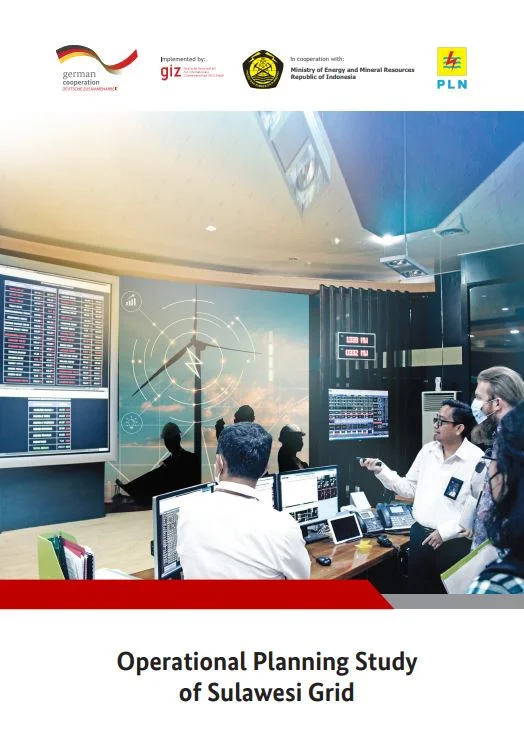
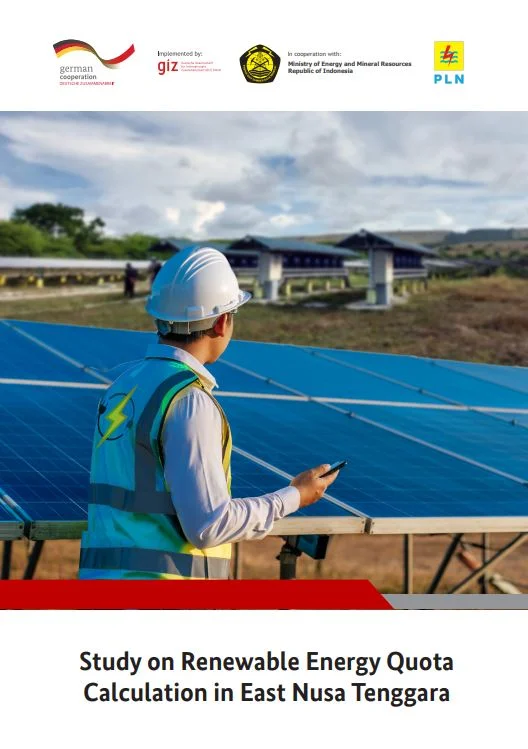
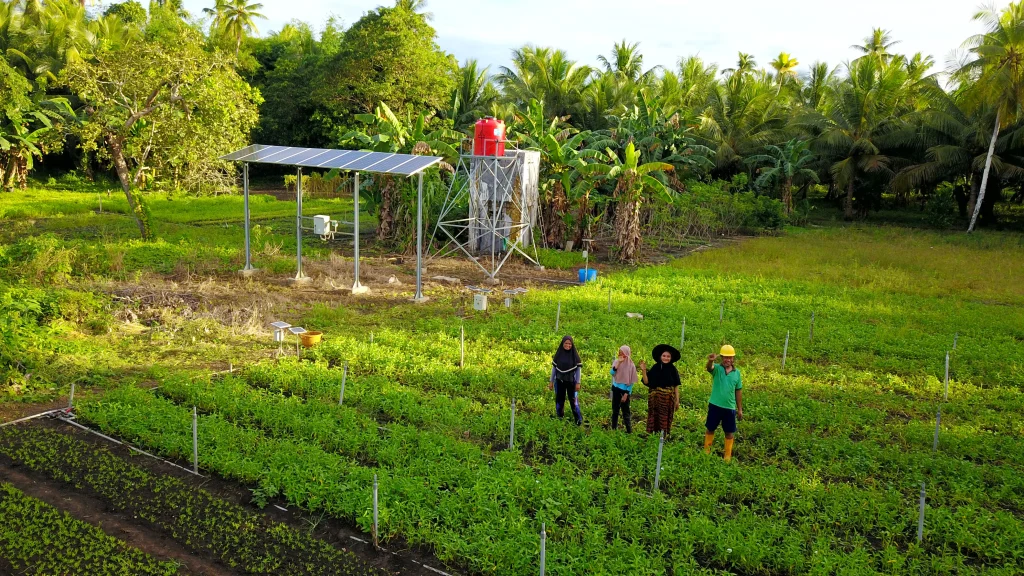
In its second phase, the project focused on two target regions, Sulawesi and East Nusa Tenggara (NTT) with good replication potential. REEP2 also supported PLN in power system planning and operation with high shares of variable renewables, while also providing related technical trainings in PLNs inhouse institute.
The work done through REEP 1 and 2 will be continued through the RE2Grid Component of the Green Energy project.
Project Activity Areas (Outputs)
Improve the Regulatory Framework to Promote Decentralised Renewable Energy
Support PLN in Power System Planning and Operation with High Shares of Variable Renewables
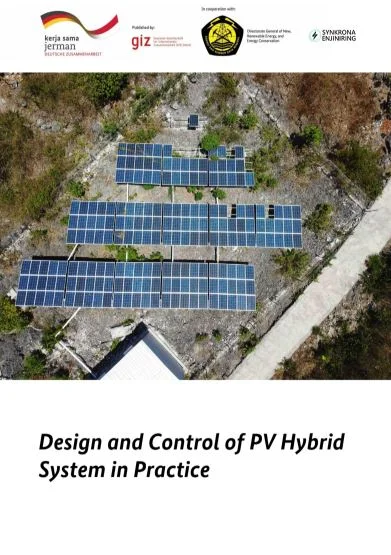
Promote RE Pilot Projects through Cooperation with the Private Sector
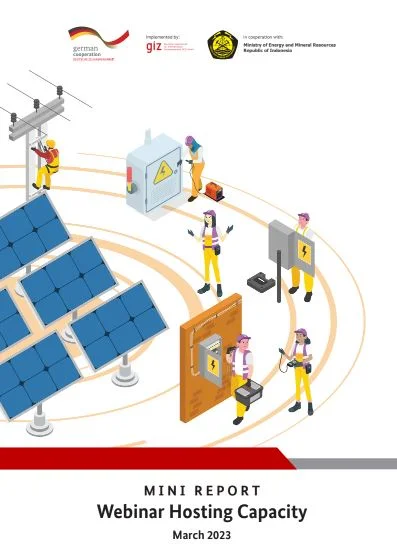
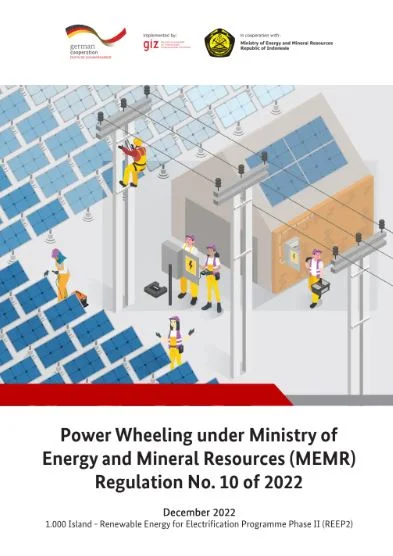
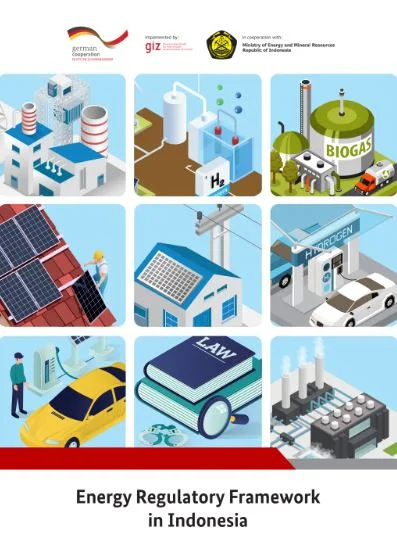
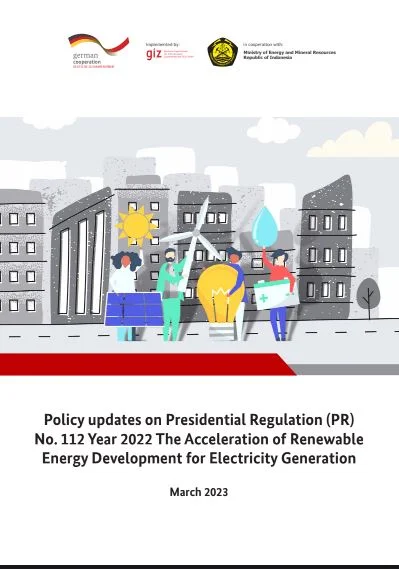
Project Publications
Project Updates
Tools
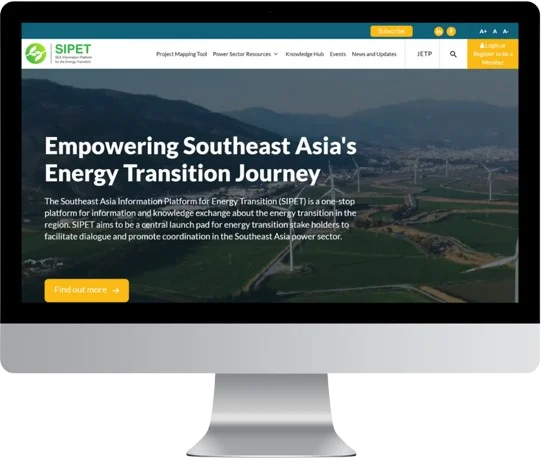
SEA Information Platform for the Energy Transition (SIPET)
The Southeast Asia Information Platform for Energy Transition (SIPET) is a one-stop platform for information and knowledge exchange about the energy transition in the region. SIPET aims to be a central launch pad for energy transition stake holders to facilitate dialogue and promote coordination in the Southeast Asia power sector.
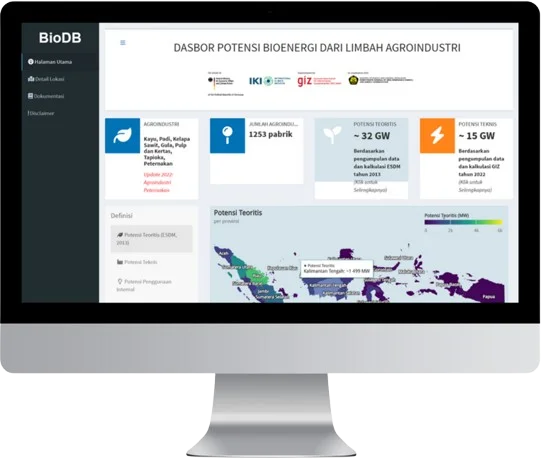
Bio DB
BioDB is a useful website for providing general information, encouraging discussion and conversation on the topic of bioenergy from agro-industrial waste. The data and information presented were collected by the Strategic Exploration of Economic Mitigation Potentials through Renewables (ExploRE) project, a project funded by the Federal Ministry for the Environment, Nature Conservation and Nuclear Safety (BMU), Federal Republic of Germany, in collaboration with the Ministry of Energy and Mineral Resources (ESDM) of the Republic of Indonesia, and implemented by the Deutsche Gesellschaft für Internationale Zusammenarbeit (GIZ)
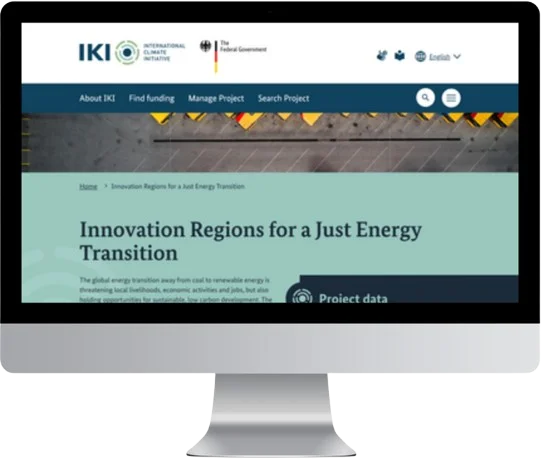
IKI JET
The global energy transition away from coal to renewable energy is threatening local livelihoods, economic activities and jobs, but also holding opportunities for sustainable, low carbon development. The project aims at supporting key stakeholder of coal regions to plan for and implement regional just energy transition pathways away from coal and towards a low-carbon energy system. Focusing on the regional economic transformations, the project works with government, industry, unions, communities, civil society, and academia. It supports interregional peer-to-peer exchange, learning, and policy dialogue in an international network and information sharing via a knowledge hub. In Indonesia, it supports the development of specific transition plans in two coal regions. In Colombia, it supports the development of the concept and framework for energy communities and the implementation of just and inclusive energy communities in César and la Guajira.
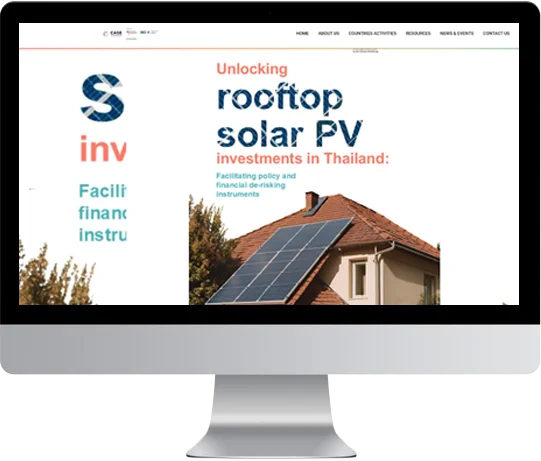
CASE for Southeast Asia
The “CASE for Southeast Asia” website is dedicated to the promotion of clean, affordable, and secure energy transitions across Southeast Asia. The website focuses on the provision of resources, the conducting of research, and the facilitation of collaborative projects in countries such as Indonesia, Thailand, the Philippines, and Vietnam, with the aim of supporting energy transition efforts. The platform highlights the challenges and opportunities in the region’s energy sector, while sharing knowledge, best practices, and policy recommendations aimed at advancing the transition to renewable energy and sustainable development
Contact
Project Address
De Ritz Building, Floor 2
Jl. HOS Cokroaminoto No. 91, DKI Jakarta, Indonesia
- N / A
- N / A
N / A
N / A
- N / A