Sustainable and Reliable Energy Access Program (RBL SREAP)
Status
Ongoing
Overall Project Duration
2023-2026 (Ongoing)
Commissioner
N/A
Political Partner
State Electricity Company (PLN)
Cooperation Partners
State Electricity Company (PLN)
Implementing Organization
KFW
Project page on organization website
- N/A
Project Documents and Links
- N/A
The aim of the project is to sustainably and broadly improve access to a reliable, modern electricity supply for the population and businesses in the five target regions in West and Central Java. The target group is private households and businesses, especially MSMEs, in the project area.
The program’s implementation structure is geared toward achieving concrete results, which determine the disbursement of funds. Target achievement is reviewed annually by an independent consultant. Indicators ( disbursement Linked Indicators (DLIs) were used, e.g. the annual reduction of power outages and their duration as well as the increase in procedures that comply with international environmental and social standards within PLN.
Background
The island of Java dominates Indonesia’s economy, contributing 59% to the national GDP in 2020. With a population of more than 151 million, Java is home to around 56% of Indonesia’s 270 million inhabitants and 34% (8.6 million) of the country’s poor, who live on less than one US dollar a day. 47% of all Indonesian micro and small enterprises are located in the program area. While there is widespread access to electricity, frequent interruptions and power losses limit security of supply. To achieve sustainable and inclusive economic growth and meet rising electricity demand, Java will require 259 TW of electricity by 2030. This is projected to account for around 66.4% of Indonesia’s total electricity demand. In order to meet this demand and achieve the Indonesian government’s ambitious goals for the expansion of renewable energies, Java’s electricity grid must be strengthened, especially in terms of distribution.
Project Approach
N/A
Desired Impacts
N/A
Project Activity Areas (Outputs)
Power grid rehabilitation, strengthening, and expansion:
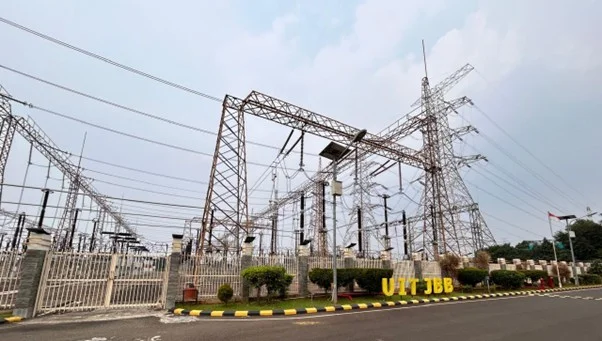
This involves improving the existing power grid infrastructure to enhance its reliability, efficiency, and capacity to meet the growing energy demand in Western and Central Java.
Promotion of clean energy use:
This includes initiatives to encourage the adoption of renewable energy sources and energy-efficient technologies, reducing reliance on fossil fuels and mitigating environmental impacts.
Strengthened institutional capacity:
This entails enhancing the capabilities and expertise of relevant government agencies and institutions involved in energy planning, management, and implementation. This includes developing clear policies, guidelines, and procedures, as well as providing training and capacity-building opportunities for staff.
Project Publications
Project Updates
Tools
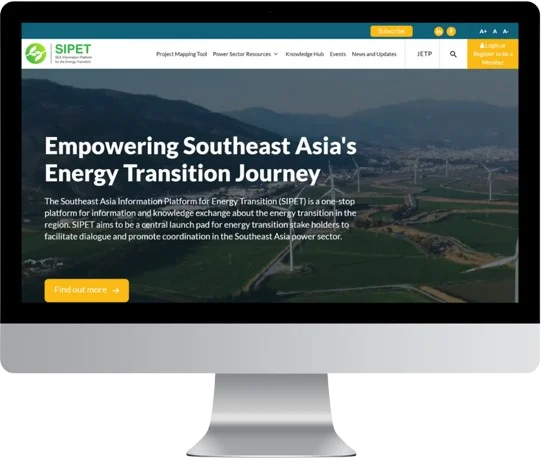
SEA Information Platform for the Energy Transition (SIPET)
The Southeast Asia Information Platform for Energy Transition (SIPET) is a one-stop platform for information and knowledge exchange about the energy transition in the region. SIPET aims to be a central launch pad for energy transition stake holders to facilitate dialogue and promote coordination in the Southeast Asia power sector.
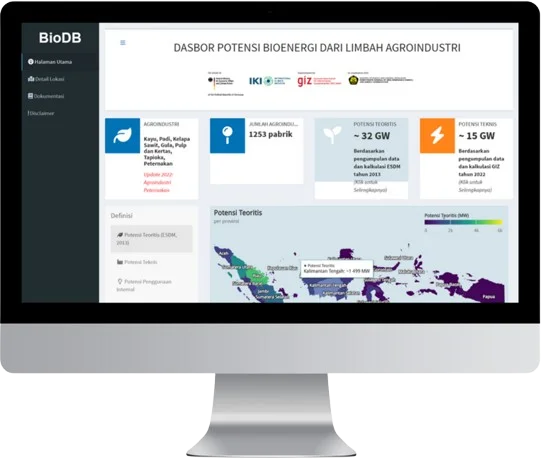
Bio DB
BioDB is a useful website for providing general information, encouraging discussion and conversation on the topic of bioenergy from agro-industrial waste. The data and information presented were collected by the Strategic Exploration of Economic Mitigation Potentials through Renewables (ExploRE) project, a project funded by the Federal Ministry for the Environment, Nature Conservation and Nuclear Safety (BMU), Federal Republic of Germany, in collaboration with the Ministry of Energy and Mineral Resources (ESDM) of the Republic of Indonesia, and implemented by the Deutsche Gesellschaft für Internationale Zusammenarbeit (GIZ)
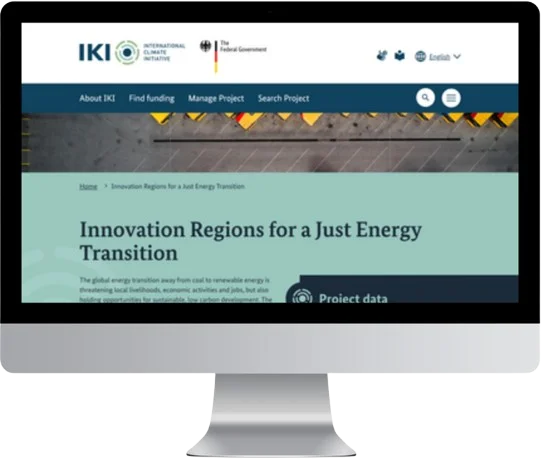
IKI JET
The global energy transition away from coal to renewable energy is threatening local livelihoods, economic activities and jobs, but also holding opportunities for sustainable, low carbon development. The project aims at supporting key stakeholder of coal regions to plan for and implement regional just energy transition pathways away from coal and towards a low-carbon energy system. Focusing on the regional economic transformations, the project works with government, industry, unions, communities, civil society, and academia. It supports interregional peer-to-peer exchange, learning, and policy dialogue in an international network and information sharing via a knowledge hub. In Indonesia, it supports the development of specific transition plans in two coal regions. In Colombia, it supports the development of the concept and framework for energy communities and the implementation of just and inclusive energy communities in César and la Guajira.
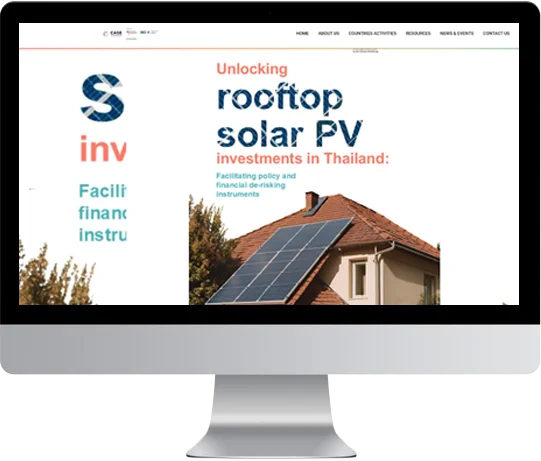
CASE for Southeast Asia
The “CASE for Southeast Asia” website is dedicated to the promotion of clean, affordable, and secure energy transitions across Southeast Asia. The website focuses on the provision of resources, the conducting of research, and the facilitation of collaborative projects in countries such as Indonesia, Thailand, the Philippines, and Vietnam, with the aim of supporting energy transition efforts. The platform highlights the challenges and opportunities in the region’s energy sector, while sharing knowledge, best practices, and policy recommendations aimed at advancing the transition to renewable energy and sustainable development
Contact
Project Address
TBD
- N/A
- N/A
Teresa