Sustainable and Reliable Energy Access Program (RBL SREAP)
Partner
PLN
Project duration
Project volume
Location
Type of funding
Project approach
Project status
Implementation
Background
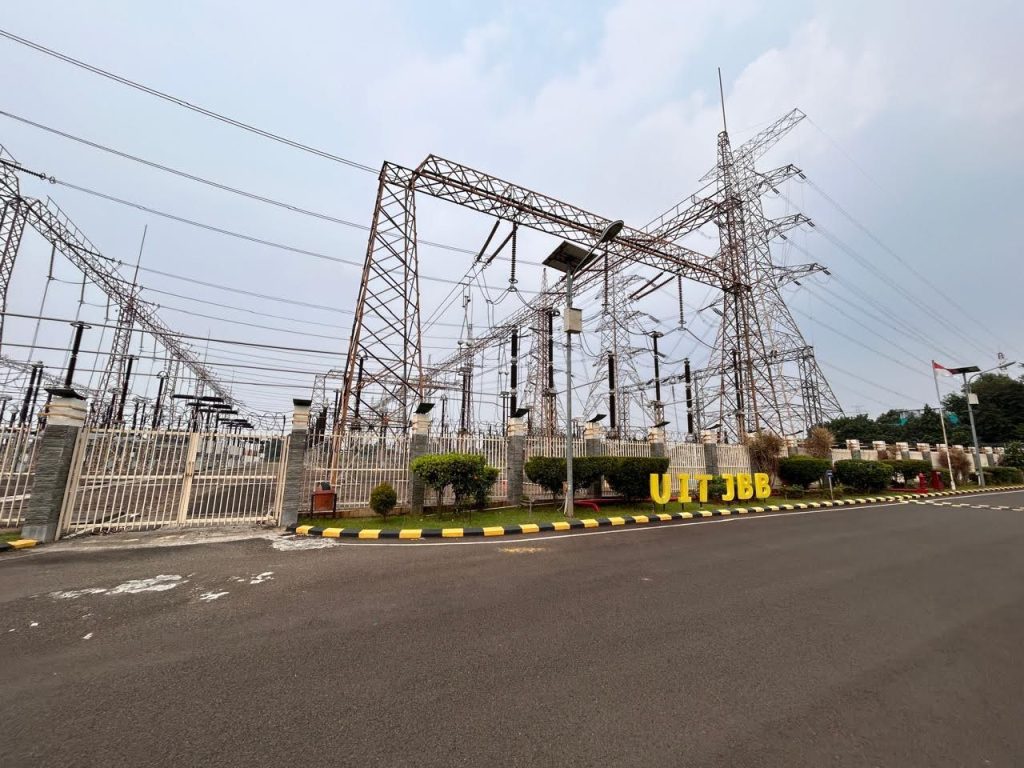
Java plays a crucial role in Indonesia’s economy, accounting for nearly 60% of its GDP in 2020. It’s home to most manufacturing centers and a majority of the country’s small businesses. While Java has achieved universal electricity access, power quality problems and frequent outages hinder its economic potential. A stronger power grid could have prevented widespread blackouts that affected major cities like Jakarta in 2019 and 2020. To sustain and boost its economic growth, Java will need to significantly increase its electricity supply by 2030, requiring a stronger and more reliable power grid.
The Program applies a Results-Based Loan (RBL) approach for strengthening and enhancing access to sustainable and reliable energy for the population in Western and Central Java. This approach ties loan disbursements to the achievement of specific results, strengthening government-owned programs. By encouraging accountability, efficiency, and effectiveness, the RBL approach aims to create incentives for achieving and maintaining results, promoting institutional development, and fostering coordinated development.
Programme Outcome
The program aims to improve access to sustainable and reliable energy for the population in the Western and Central Java regions. It will provide financial support for a portion of the broader program outlined in PLN’s Electricity Power Supply Business Plan (RUPTL) 2021-2030. The program focuses on five provinces in the western and central parts of Java Island: Banten, West Java, Central Java, Jakarta Special Capital Region (DKI-Jakarta), and Yogyakarta Special Region (DI-Yogyakarta). These provinces are home to a significant portion of Indonesia’s population, accounting for approximately 41% of the country’s 270 million people.
The program’s outcomes are reflected in three key results at the output level:
- Power grid rehabilitation, strengthening, and expansion: This involves improving the existing power grid infrastructure to enhance its reliability, efficiency, and capacity to meet the growing energy demand in Western and Central Java.
- Promotion of clean energy use: This includes initiatives to encourage the adoption of renewable energy sources and energy-efficient technologies, reducing reliance on fossil fuels and mitigating environmental impacts.
- Strengthened institutional capacity: This entails enhancing the capabilities and expertise of relevant government agencies and institutions involved in energy planning, management, and implementation. This includes developing clear policies, guidelines, and procedures, as well as providing training and capacity-building opportunities for staff.
Project Activity Areas (Outputs)
Power grid rehabilitation, strengthening, and expansion
Promotion of clean energy use
Strengthened institutional capacity
These outputs are further translated into specific disbursement-linked indicators and program action plans, which outline the measurable targets and activities to be undertaken to achieve these results.
Project Publications
Project Updates
Tools
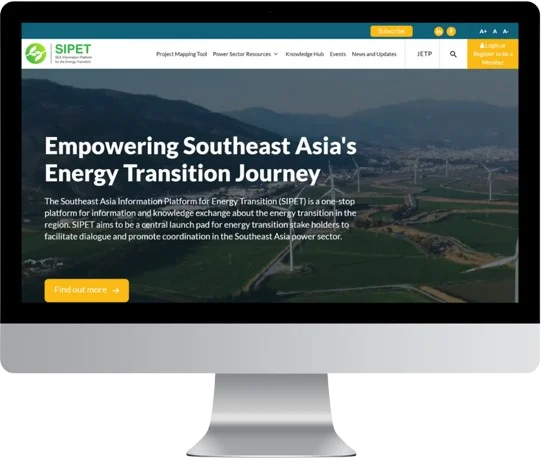
SEA Information Platform for the Energy Transition (SIPET)
The Southeast Asia Information Platform for Energy Transition (SIPET) is a one-stop platform for information and knowledge exchange about the energy transition in the region. SIPET aims to be a central launch pad for energy transition stake holders to facilitate dialogue and promote coordination in the Southeast Asia power sector.
Bio DB
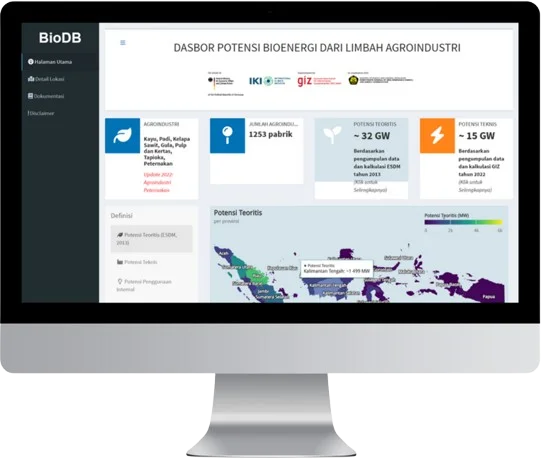
BioDB is a useful website for providing general information, encouraging discussion and conversation on the topic of bioenergy from agro-industrial waste. The data and information presented were collected by the Strategic Exploration of Economic Mitigation Potentials through Renewables (ExploRE) project, a project funded by the Federal Ministry for the Environment, Nature Conservation and Nuclear Safety (BMU), Federal Republic of Germany, in collaboration with the Ministry of Energy and Mineral Resources (ESDM) of the Republic of Indonesia, and implemented by the Deutsche Gesellschaft für Internationale Zusammenarbeit (GIZ)
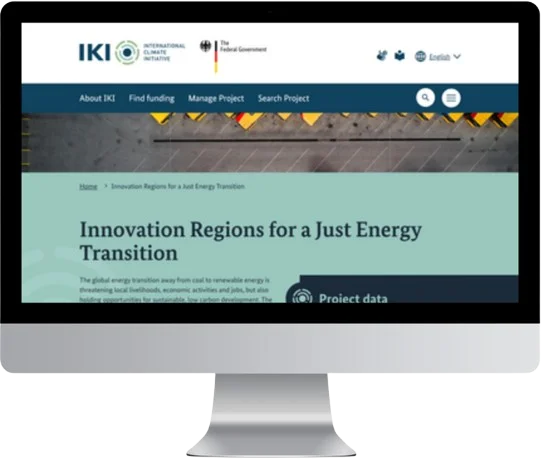
IKI JET
The global energy transition away from coal to renewable energy is threatening local livelihoods, economic activities and jobs, but also holding opportunities for sustainable, low carbon development. The project aims at supporting key stakeholder of coal regions to plan for and implement regional just energy transition pathways away from coal and towards a low-carbon energy system. Focusing on the regional economic transformations, the project works with government, industry, unions, communities, civil society, and academia. It supports interregional peer-to-peer exchange, learning, and policy dialogue in an international network and information sharing via a knowledge hub. In Indonesia, it supports the development of specific transition plans in two coal regions. In Colombia, it supports the development of the concept and framework for energy communities and the implementation of just and inclusive energy communities in César and la Guajira.
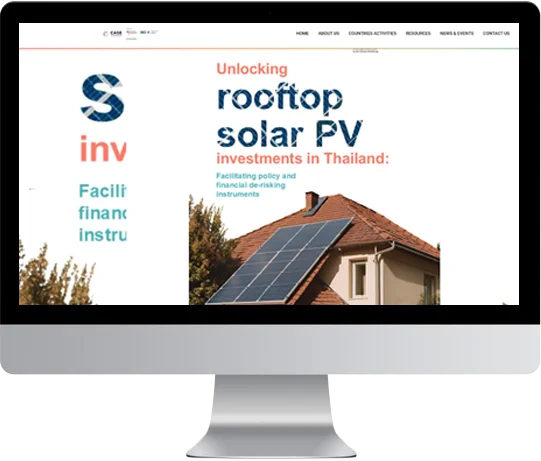
CASE for Southeast Asia
The “CASE for Southeast Asia” website is dedicated to the promotion of clean, affordable, and secure energy transitions across Southeast Asia. The website focuses on the provision of resources, the conducting of research, and the facilitation of collaborative projects in countries such as Indonesia, Thailand, the Philippines, and Vietnam, with the aim of supporting energy transition efforts. The platform highlights the challenges and opportunities in the region’s energy sector, while sharing knowledge, best practices, and policy recommendations aimed at advancing the transition to renewable energy and sustainable development
Contact
Project Address
TBD
- N/A
- N/A
Teresa