Sustainable Energy Access in Eastern Indonesia (RBL SNT)
Partner
Project duration
2019-2023
Project volume
Location
Type of funding
Project approach
Project status
The programme aims to support the development of electricity distribution networks to connect businesses and households and improve the quality of life in Sulawesi and Nusa Tenggara through the sustainable use of electricity as a key to increasing economic activity.
Background
Indonesia has been on a stable growth trajectory for several years. Java and Bali, in particular, have grown significantly faster than the eastern parts of Indonesia. This is leading to ever-increasing regional income disparities between Java and Bali and the eastern provinces. Eastern Indonesia has enormous potential to develop new sources of sustainable and inclusive economic growth in sectors such as fishing, agro-industry, and tourism. However, this potential cannot be fully realized due to a lack of key infrastructure such as electricity supply, ports, roads, and communications networks. To improve this situation, the government had made accelerating infrastructure investments, including in the remote and eastern parts of the country, one of its main objectives as part of the National Medium-Term Development Plan (RPJMN) 2020-2024, with rural electrification playing a key role. The program built on this goal:
Although nationwide electrification was already at 99% by the end of 2019, electrification rates in eastern Indonesia, i.e., in some areas of Sulawesi, Papua, and North Kalimantan, were 80% or less. A key reason for this was the limited availability and quality of the power grid. The project presented here aims to address this.
Status of Implementation
The implementation phase ended on December 31, 2023. The programme was highly successful, with a target achievement rate of approximately 98%. The program’s implementation structure, as a RBL, was geared toward achieving concrete results, which guide the disbursement of funds. Target achievement was reviewed annually by an independent consultant. Indicators (Disbursement-Linked Indicators, DLIs), such as the expansion of the distribution network infrastructure and increased access to electricity services, were used to measure target achievement and the corresponding disbursement. The targets have been almost fully met. Accordingly, PT PLN is entitled to receive 98% of the loan amount. The final disbursement was made in October 2024, meaning PLN has received 98% of the loan amount in full.
Tools
SEA Information Platform for the Energy Transition (SIPET)
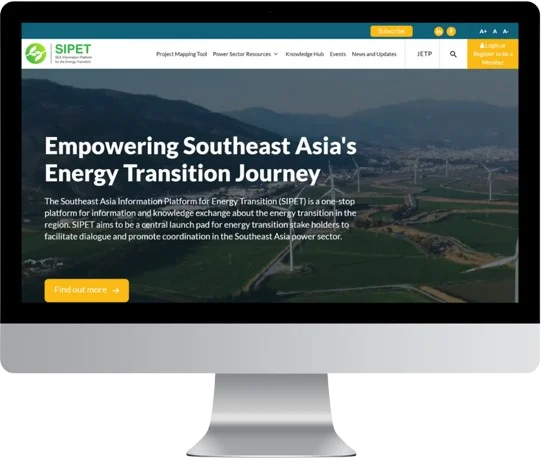
The Southeast Asia Information Platform for Energy Transition (SIPET) is a one-stop platform for information and knowledge exchange about the energy transition in the region. SIPET aims to be a central launch pad for energy transition stake holders to facilitate dialogue and promote coordination in the Southeast Asia power sector.
Bio DB
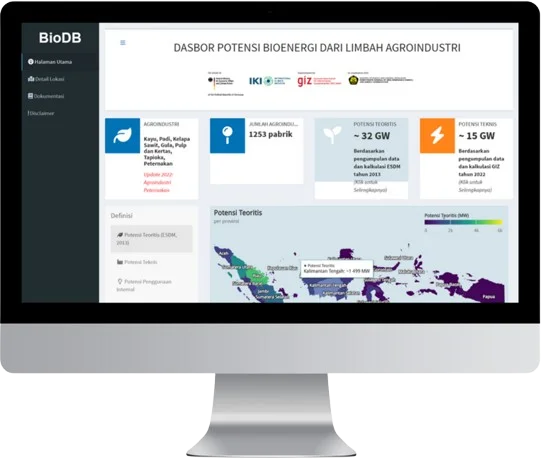
BioDB is a useful website for providing general information, encouraging discussion and conversation on the topic of bioenergy from agro-industrial waste. The data and information presented were collected by the Strategic Exploration of Economic Mitigation Potentials through Renewables (ExploRE) project, a project funded by the Federal Ministry for the Environment, Nature Conservation and Nuclear Safety (BMU), Federal Republic of Germany, in collaboration with the Ministry of Energy and Mineral Resources (ESDM) of the Republic of Indonesia, and implemented by the Deutsche Gesellschaft für Internationale Zusammenarbeit (GIZ)
IKI JET
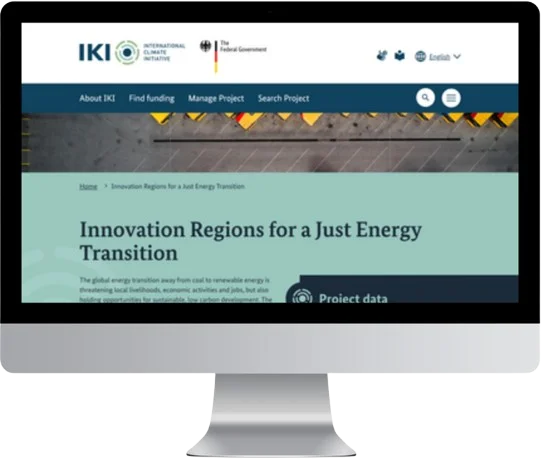
The global energy transition away from coal to renewable energy is threatening local livelihoods, economic activities and jobs, but also holding opportunities for sustainable, low carbon development. The project aims at supporting key stakeholder of coal regions to plan for and implement regional just energy transition pathways away from coal and towards a low-carbon energy system. Focusing on the regional economic transformations, the project works with government, industry, unions, communities, civil society, and academia. It supports interregional peer-to-peer exchange, learning, and policy dialogue in an international network and information sharing via a knowledge hub. In Indonesia, it supports the development of specific transition plans in two coal regions. In Colombia, it supports the development of the concept and framework for energy communities and the implementation of just and inclusive energy communities in César and la Guajira.
CASE for Southeast Asia
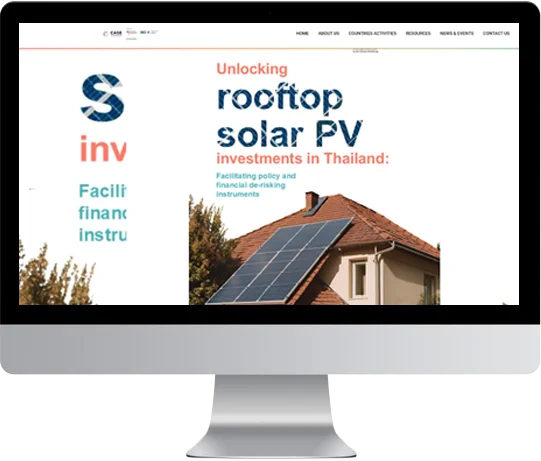
The “CASE for Southeast Asia” website is dedicated to the promotion of clean, affordable, and secure energy transitions across Southeast Asia. The website focuses on the provision of resources, the conducting of research, and the facilitation of collaborative projects in countries such as Indonesia, Thailand, the Philippines, and Vietnam, with the aim of supporting energy transition efforts. The platform highlights the challenges and opportunities in the region’s energy sector, while sharing knowledge, best practices, and policy recommendations aimed at advancing the transition to renewable energy and sustainable development
Contact
Project Address
TBD
- N/A
- N/A
Teresa